
 Dave Alsobrooks
Fervor in Petrograd, identity in Bruges, and two ways to commit to an idea.
Show the internet Kazimir Malevich's Black Square, and you'll hear some version of the same line. "Bro painted a black square. I could do that."
They're right about one thing. There's practically no execution to admire. A black square on a white field. I think it's fantastic.
But nobody in the comments hung a square where he did.
When it was first shown in Petrograd in 1915, Malevich placed Black Square high in the corner of the room. Anyone walking in knew this was the spot a Russian household reserved for its holy icon. Instead of an icon, they found a simple, severe square. Or was this, indeed, an icon? The hanging of Black Square was a wild move in its day. The painting was the easy part. Knowing where it belonged was the work.
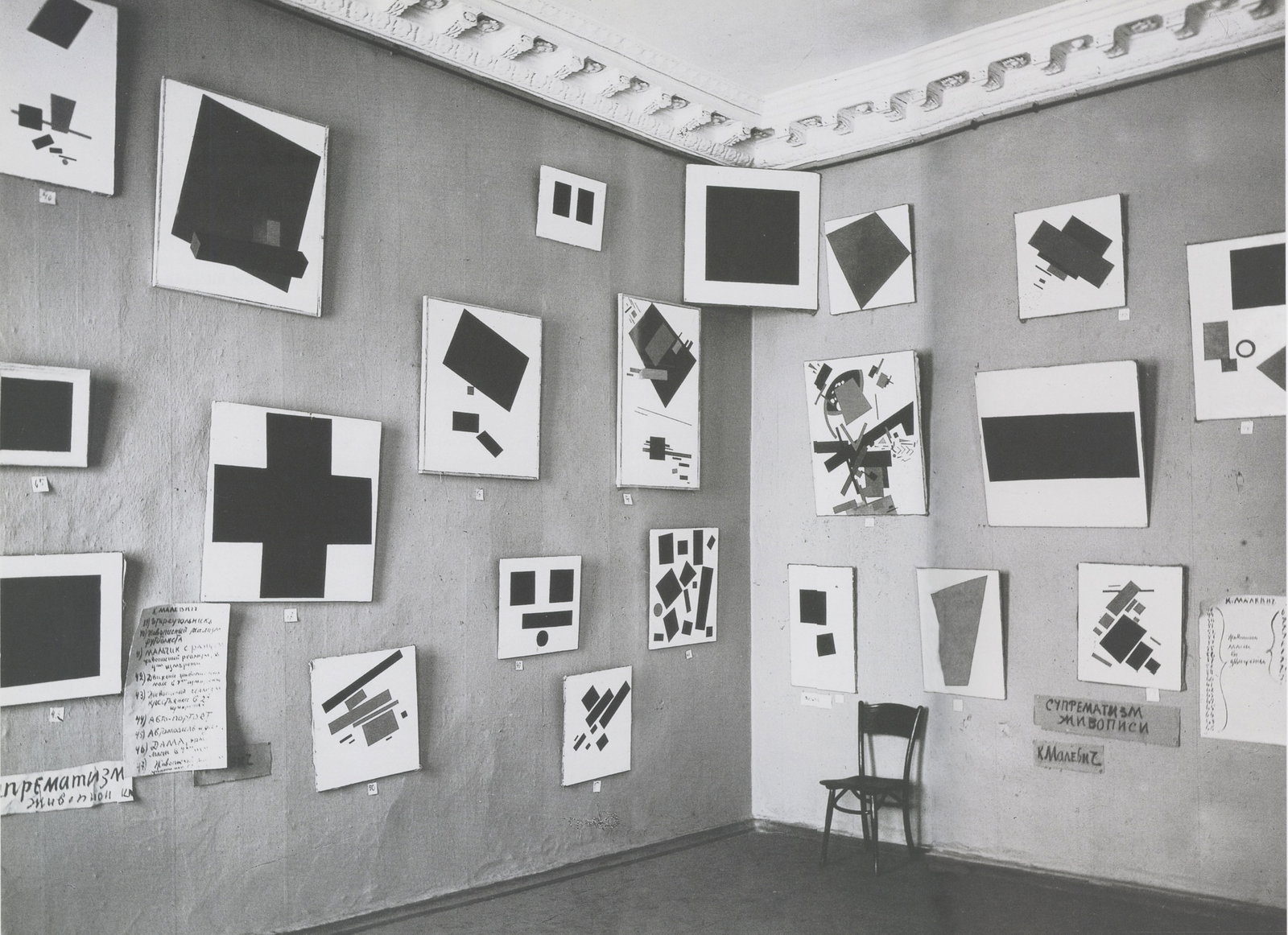
By the early 1900s, centuries of realism had exhausted the art of execution, so painterly skill was no longer news. Malevich wasn't showboating technique. He was too busy declaring the origin of a new art, one where form is emptied of everything but the idea. One statement, made once. Barely any execution, and yet an entire revolution of meaning.
Nearly 500 years before, Jan van Eyck told a story with no less conviction, but far more evidence. When he painted The Arnolfini Portrait in Bruges in 1434, he painted everything into the frame. A small terrier at the couple's feet. Pattens on the floor. Clasped hands and a single lit candle. Ripened, imported oranges. And what of that glorious green houppelande?
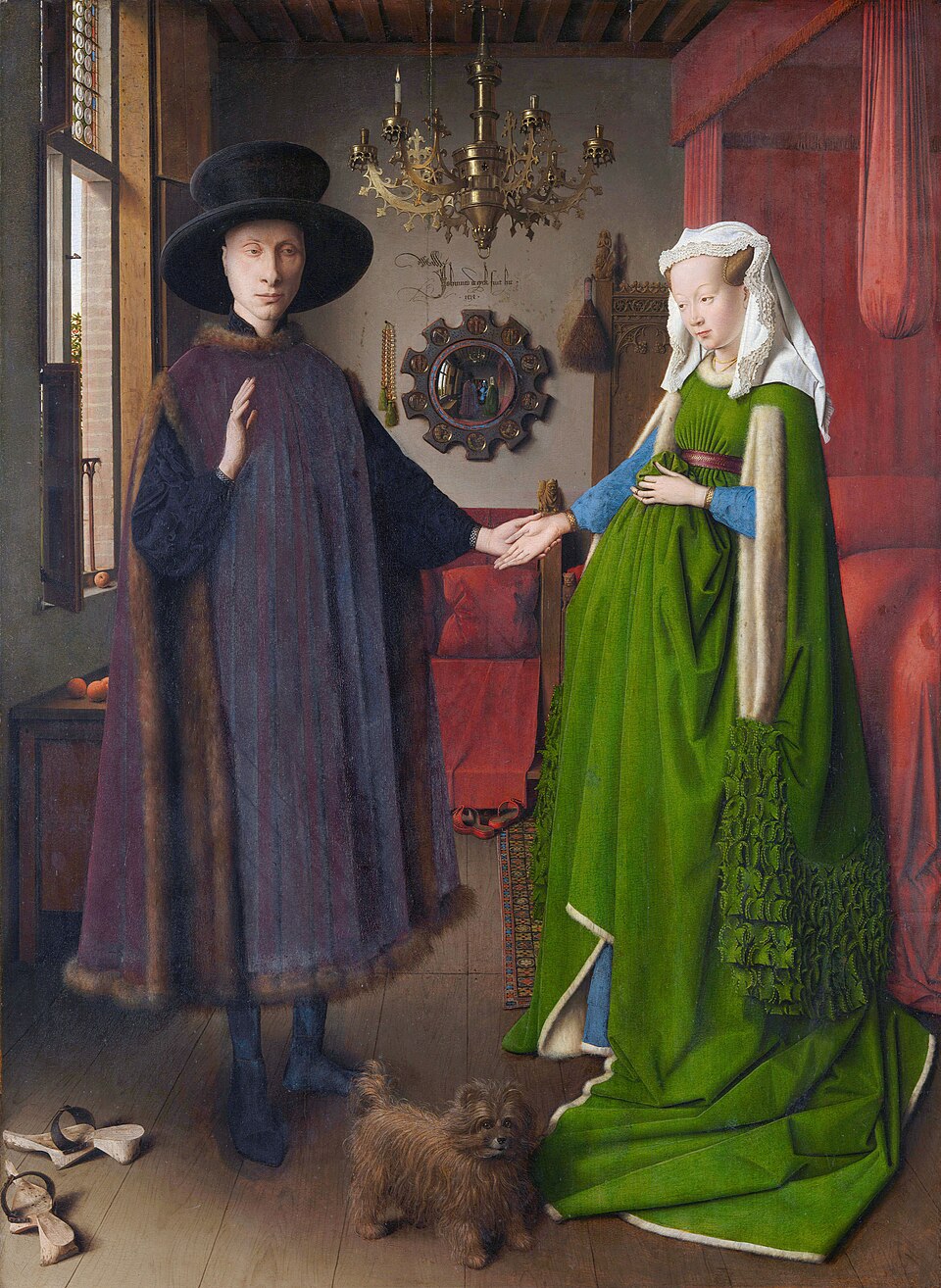
Scholars still quibble over what it all means, but few would call any of it decoration. Each object carries part of the idea, and piece by piece they weave a story of identity, layered with fidelity, fertility, and status. To this day, van Eyck's craft is flawless, but the meaning dwarfs even that.
Where Malevich says it once, van Eyck builds a world where the story can be seen from every side. That isn't defensive. It's an invitation. A concept made so complete that the viewer walks into it, and can't ever really walk away.
Ask almost anyone what they're working on, and they'll name a thing. A strategy deck, a kitchen remodel, a wedding toast. Those are executions, the forms an idea takes as it arrives. Every one of them faces the same two questions Malevich and van Eyck did. How much does this need to say, and where does it live? One answered with a single square, hung in the icon's corner. The other answered with a whole room, built into the frame.
One idea breaks the mold. Another builds the case. In both, the concept comes first.